

Author's posts
Mar 22
Query to find user access and roles in Teradata

Teradata developers have to face the scenarios where they need to check whether their user id (or someone else in their team) has access to particular database or table in Teradata. For this trivial question, it’s not wise to disturb the admin/DBA team if you can check it yourself by querying on just 2 DBC tables. …
Mar 06
Active Database for Interview Questions

Dear Readers, We at TeradataTech, like the idea of creating a database where we can capture all the questions asked by different technical recruiters. So that our readers can prepare well before appearing for any Teradata related interviews. This database of interview questions will come only from you all, and we encourage everyone who has …
Jan 11
Teradata Tech Associates

Greetings from www.teradatatech.com !!! We at TeradataTech are looking for professionals who are interested in technical work related with Teradata, data warehouse and other relevant technologies. Approximate of 3-4 hours on weekends or 1-2 hours on weekday effort is required based on your preference. Currently we have multiple requirements like – Technical blog writers in …
Jan 17
Teradata 14 Certification

Teradata 14 is the latest certification track launched by teradata after Teradata 12 certification. Teradata 14 certification covers the following database – Teradata 13.0 Teradata 13.10 Teradata 14.0 The list of exams is as follows – Exam Exam Title Testing Time TE0-141 Teradata 14 Basics exam 1 hour 30 minutes TE0-142 Teradata 14 SQL exam …
Mar 21
Partition Primary Index – Advantage and Disadvantage
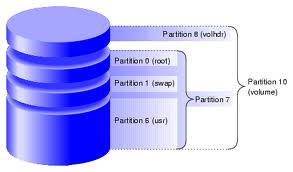
Advantage of Partition Primary Index – Partitioned Primary Index is one of the unique features of Teradata, which is used for distribution of rows based on different partitions so that they can be retrieved much faster than any other conventional approach. Maximum partitions allowed by Teradata – 65,535 It also reduces the overhead of scanning the complete …
Feb 25
Partition Primary Index – Basics
Partitioned primary index or PPI is used for physically splitting the table into a series of subtables. With the proper use of Partition primary Index we can save queries from time consuming full table scan. Instead of scanning full table, only one particular partition is accessed. Follow the example below to get the insight of PPI – …
Jan 17
Compression in Teradata

What is Compression in Teradata Compression is the feature of Teradata which helps to reduce the disk storage. It is useful in reducing the disk space required by FIXED LENGTH columns or NULLS. It is a loss less compression so no data will be lost in it. We can do compression on the following data …


Sponsors of Teradata Tech